Everyone is being affected by the Covid-19 pandemic – for some it may
be just a mild inconvenience, for others it may be a major disruption
to their daily lives. Some people are overwhelmed and beginning to
panic while others are completely nonchalant.
For those of us working in childcare the big question has been ‘Is the daycare going to close?’ and the only available answer has been ‘We don’t know.’
Even in the field there are arguments both for and against closing
childcare facilities. Many think that because the schools are closing,
childcare facilities should too. Others argue that childcare is an
essential service and must remain open for those parents who need to go
to work.
My personal, possibly not popular opinion, is that licensed childcare facilities should NOT be forced to close.
Certainly, any sick children or staff should not be there and should
be isolated at home, but what about those children whose parents still
need to go to work? If they have a spouse or other family member who is
temporarily off work then they have options but what if they don’t?
What if their only available childcare option is Grandma – whose
immune system is already compromised? Maybe another choice is the unlicensed
childcare provider who wasn’t forced to close and now has agreed to
temporarily take in any and all the children who need childcare.
Wouldn’t a licensed childcare facility – with strict cleaning and
disinfecting procedures already in place – be a better option?
Yes, social distancing is a very difficult if not impossible concept
for children but most trained early childhood educators have the skills
to implement games and activities to limit direct contact. Many of us
will actually be spending most of our time playing outdoors in the fresh
air.
If licensed facilities are forced to close where will those children
go? Are they able to be with their family or are their parents at work
and the children are huddled on the couch watching movies with their
friends. What if their parents’ only option now is to send them to that
one person on the block who says ‘No problem, send them all here, we’re
having a party’.
Sure, if parents are off work and able to use this situation to be
isolated at home spending quality time with their family that is
probably the best option. The reality is that there are still a lot of
parents who need to go to work and closing all licensed childcare
facilities might just be the worst thing to do.

Adventures in Family Childcare
Showing posts with label Licensing. Show all posts
Showing posts with label Licensing. Show all posts
Monday, March 16, 2020

Friday, September 6, 2019
Parent Fees & Private Childcare
So, I wrote this post more than a week ago, published it, reread it,
didn’t like it, removed it, rewrote it – twice, and I think now it might
be at least a little closer to what I want to say. Writing is hard
sometimes.
Childcare is an important issue for many parents in Manitoba – more specifically, the lack of access to quality, affordable childcare. I’ll admit that during the last provincial election I got more than a little excited when the PC government promised to streamline the licensing process to encourage more family childcare providers to become licensed – it is not often that the government puts any focus on home based childcare. Sadly, they then froze grant funding and encouraged newly licensed unfunded providers to charge higher parent fees.
Now I will also think parent fees could be increased to help offset all the increases in expenses faced by childcare facilities. I thought this article by Tom Brodbeck was interesting. Even in my lower income area most unfunded and/or private, unlicensed home based providers charge parent fees that are much higher than my parent fees – and parents pay it. In higher income neighbourhoods and daycare deserts unfunded/unlicensed homes often charge considerably more. Maybe it is a parent’s ‘choice’ to put their child in private, unlicensed/unfunded care with higher parent fees – or maybe it is their only available option.
Funded family childcare providers like me are not allowed to raise our parent fees if we want to keep our funding. In a funded childcare facility parent fees for a preschool child are only $2.70 per day higher today than they were 22 years ago when I first began my childcare career. Over those years I have received increases in my operating grant funding so that it is now 28% of my gross income instead of just 5% of my income 22 years ago. Still, even with that grant funding and parent fees combined my income is still less than that of most private home daycares – about $13.38 per hour for hours I spend with the children – prep, cleaning and paperwork are all unpaid hours.
So yes, I am horrified when I hear a politician say they want to create portable subsidies for low income families to use in private childcare facilities because I know that even with portable subsidies those parents will still be paying much more than what they would pay in a funded, licensed facility – which already accept subsidized families. The problem is there are not enough funded licensed spaces – so the politicians say they will increase the number of licensed childcare spaces but if they don’t fund them then the parent fees will need to be increased in order to cover the costs of operating.
Even funded childcare centres are finding it difficult to attract or retain staff with the current set parents fees. When I hear politicians promise to lower parent fees to make childcare more affordable for parents I want to scream ‘Do you have any idea how much additional grant funding it will take to compensate for lower parent fees?’ Or are you planning to lower wages too and drive more ECE’s out of licensed care.
Trained ECE’s are already leaving their jobs in childcare centres and some of them are choosing to open private, unlicensed childcare homes. I fully understand the allure of home based childcare but with no funding available for new providers there is no financial benefit to becoming licensed – in fact they will probably earn more being unlicensed/unfunded and only accessible to higher income families willing/able to pay higher parent fees. There are no numbers available as to how many unlicensed childcare homes there are because there is no way to track that because they are unregulated. There are only just over 200 licensed home based providers in the whole province – far fewer than there were when I first became licensed.
Many parents and even politicians do not understand the difference between licensed and private childcare homes. When I was talking to a politician on my doorstep and mentioned that I was a licensed family childcare provider they said they had met a couple of other providers on my street – they couldn’t tell my if they were licensed or not ‘but they had business cards’. *sigh* Not licensed – there are no other licensed providers on my street – or any of the streets around me – that is easy to check here.
It is true that licensing does not guarantee ‘quality’ but I think ‘unlicensed’ is also ‘unprofessional’ even, or maybe especially unprofessional if you are a trained ECE. Many parents may not understand the difference between training and licensing and not realize that their trained private provider is in fact not licensed. In Manitoba a private home childcare provider, trained or untrained, may not care for more than four children under 12 years of age including their own children. Yet, I know many trained ECE’s whose only experience is in centre based care and who are surprised to learn that child/caregiver ratios are different in home based childcare. I also hear from many parents who are unable to find licensed childcare and have placed their child in a private home but are unsure how many children are actually being cared for there.
Yes, training enhances the quality of childcare but it is licensing and funding that enable childcare to be accessible and affordable. Private childcare is not affordable nor accessible especially for low income families even if there was a subsidy available. I don’t believe families of any income level would choose unlicensed care if there was enough licensed care available.
Maybe what should be suggested is that childcare waitlists and enrollment forms should include information about each family’s income level so licensed funded childcare facilities could weed out all the high income earners who were using up all the childcare spaces with low parent fees when they could really afford the higher fees in the private centres. I’m sure that then we’d hear a lot more public outcry that it is not fair that licensed care is only accessible to low income families.
So, I love my job and I wouldn’t want to do anything else and so far I can still pay all my bills and I get to play outside and I get paid in hugs every day so I shouldn’t complain – right? There are so many other people who are worse off than me – but really, that is my point. Even though, like other licensed funded facilities, my parent fees haven’t increased and my grant funding has been frozen for the past three years and my expenses have increased – I can still provide childcare to low income subsidized families.
Yes, I could drop my funding and raise my parent fees and still be licensed but earn more money – but then I’d have to exclude low income families and I won’t do that. I will continue to pay 22% of my taxable income back to the government because I know paying taxes is important for everyone. Then I’ll use my remaining $2400 a month to pay my ever increasing bills so I can be here for the families that trust me to provide care and education for their children while they go work to pay their bills and their taxes. I also really, really hope that the government then uses all those tax dollars to help those who don’t have as much as I do instead of offering it to those who already have more than they need.
Childcare is an important issue for many parents in Manitoba – more specifically, the lack of access to quality, affordable childcare. I’ll admit that during the last provincial election I got more than a little excited when the PC government promised to streamline the licensing process to encourage more family childcare providers to become licensed – it is not often that the government puts any focus on home based childcare. Sadly, they then froze grant funding and encouraged newly licensed unfunded providers to charge higher parent fees.
Now I will also think parent fees could be increased to help offset all the increases in expenses faced by childcare facilities. I thought this article by Tom Brodbeck was interesting. Even in my lower income area most unfunded and/or private, unlicensed home based providers charge parent fees that are much higher than my parent fees – and parents pay it. In higher income neighbourhoods and daycare deserts unfunded/unlicensed homes often charge considerably more. Maybe it is a parent’s ‘choice’ to put their child in private, unlicensed/unfunded care with higher parent fees – or maybe it is their only available option.
Funded family childcare providers like me are not allowed to raise our parent fees if we want to keep our funding. In a funded childcare facility parent fees for a preschool child are only $2.70 per day higher today than they were 22 years ago when I first began my childcare career. Over those years I have received increases in my operating grant funding so that it is now 28% of my gross income instead of just 5% of my income 22 years ago. Still, even with that grant funding and parent fees combined my income is still less than that of most private home daycares – about $13.38 per hour for hours I spend with the children – prep, cleaning and paperwork are all unpaid hours.
So yes, I am horrified when I hear a politician say they want to create portable subsidies for low income families to use in private childcare facilities because I know that even with portable subsidies those parents will still be paying much more than what they would pay in a funded, licensed facility – which already accept subsidized families. The problem is there are not enough funded licensed spaces – so the politicians say they will increase the number of licensed childcare spaces but if they don’t fund them then the parent fees will need to be increased in order to cover the costs of operating.
Even funded childcare centres are finding it difficult to attract or retain staff with the current set parents fees. When I hear politicians promise to lower parent fees to make childcare more affordable for parents I want to scream ‘Do you have any idea how much additional grant funding it will take to compensate for lower parent fees?’ Or are you planning to lower wages too and drive more ECE’s out of licensed care.
Trained ECE’s are already leaving their jobs in childcare centres and some of them are choosing to open private, unlicensed childcare homes. I fully understand the allure of home based childcare but with no funding available for new providers there is no financial benefit to becoming licensed – in fact they will probably earn more being unlicensed/unfunded and only accessible to higher income families willing/able to pay higher parent fees. There are no numbers available as to how many unlicensed childcare homes there are because there is no way to track that because they are unregulated. There are only just over 200 licensed home based providers in the whole province – far fewer than there were when I first became licensed.
Many parents and even politicians do not understand the difference between licensed and private childcare homes. When I was talking to a politician on my doorstep and mentioned that I was a licensed family childcare provider they said they had met a couple of other providers on my street – they couldn’t tell my if they were licensed or not ‘but they had business cards’. *sigh* Not licensed – there are no other licensed providers on my street – or any of the streets around me – that is easy to check here.
It is true that licensing does not guarantee ‘quality’ but I think ‘unlicensed’ is also ‘unprofessional’ even, or maybe especially unprofessional if you are a trained ECE. Many parents may not understand the difference between training and licensing and not realize that their trained private provider is in fact not licensed. In Manitoba a private home childcare provider, trained or untrained, may not care for more than four children under 12 years of age including their own children. Yet, I know many trained ECE’s whose only experience is in centre based care and who are surprised to learn that child/caregiver ratios are different in home based childcare. I also hear from many parents who are unable to find licensed childcare and have placed their child in a private home but are unsure how many children are actually being cared for there.
Yes, training enhances the quality of childcare but it is licensing and funding that enable childcare to be accessible and affordable. Private childcare is not affordable nor accessible especially for low income families even if there was a subsidy available. I don’t believe families of any income level would choose unlicensed care if there was enough licensed care available.
Maybe what should be suggested is that childcare waitlists and enrollment forms should include information about each family’s income level so licensed funded childcare facilities could weed out all the high income earners who were using up all the childcare spaces with low parent fees when they could really afford the higher fees in the private centres. I’m sure that then we’d hear a lot more public outcry that it is not fair that licensed care is only accessible to low income families.
So, I love my job and I wouldn’t want to do anything else and so far I can still pay all my bills and I get to play outside and I get paid in hugs every day so I shouldn’t complain – right? There are so many other people who are worse off than me – but really, that is my point. Even though, like other licensed funded facilities, my parent fees haven’t increased and my grant funding has been frozen for the past three years and my expenses have increased – I can still provide childcare to low income subsidized families.
Yes, I could drop my funding and raise my parent fees and still be licensed but earn more money – but then I’d have to exclude low income families and I won’t do that. I will continue to pay 22% of my taxable income back to the government because I know paying taxes is important for everyone. Then I’ll use my remaining $2400 a month to pay my ever increasing bills so I can be here for the families that trust me to provide care and education for their children while they go work to pay their bills and their taxes. I also really, really hope that the government then uses all those tax dollars to help those who don’t have as much as I do instead of offering it to those who already have more than they need.
Wednesday, August 2, 2017
My Dream
In Manitoba a licensed family childcare provider can care for a maximum of eight children under 12 years of age. Of those eight children, no more than five may be under six – the other three must be in grade one or older. I love having a mixed age group and the opportunity to build a relationship with the children in my care from infancy through school-age.
Over the twenty years I have been providing childcare in my home I have known many amazing school-age children who have thrived in this setting. Some struggled with peer relationships in their school environment but enjoyed being the ‘leader’ here – idolized by the younger children. Some embraced responsibility and enjoyed helping the little ones. Some were wildly creative and independent and of course there were also some who resented being with ‘babies’.
I’ve watched older children gain confidence and build their self-esteem by mentoring the younger children. I’ve seen younger children develop skills they learned from watching and copying the older children play. I’ve also had some older children that taught the little ones things/words that I wish they hadn’t. *sigh*
I’ve noticed something else – the cost of providing food, craft supplies, activities and equipment for school-age children often exceeds the income I receive for their care. I find that the school schedule is disruptive – breaking up what could be longer periods of engagement in learning activities for the preschoolers. So, for several years now I haven’t made an effort to fill empty school-age spaces.
Summer was the exception. I loved having all the ‘big kids’ here for the summer – working in the garden, going on adventures, making incredible creations, sharing fantastic stories – without the rigid school schedule. It was wonderful to have all this time with the older children instead of just the fleeting moments before/after school when everything was so hectic and there wasn’t really any time to do anything.
Yet, when I only enrolled school-age children for the summer I was finding that the first month was spent getting everyone acquainted with each other, learning routines etc. Then, just when we were starting to develop relationships, summer was over and they were gone. The ‘freedom’ of summer wasn’t quite the same with ‘new’ school-age children instead of ones we already knew. So, for the first time ever – I didn’t fill any of my school-age spaces this summer – and I’m loving it.
The school-age table has been empty;

The little ones are engaging in more age-appropriate dramatic play. They are demonstrating their creativity instead of copying someone else. I haven’t heard ‘I’m bored’ once this summer, nor have I had to spend hours shopping for tons of additional food and supplies.
I’ve also been imagining what the little ones and I could do with that extra space I have set aside for bigger children and all the supplies they need but the little ones don’t. I’ve started to think that it would be really, really nice if the province would let me exchange those three empty school-age spaces for one more preschool space.
Group childcare homes have two licensed providers and up to 12 infant/preschool children – that’s a 1:6 ratio. I have five preschool spaces and although three of those five could be infants I rarely have more than one or two – sometimes even none. If they stay with me until they start school each one year of infant care will need four years of preschool care. Hence, I’d have to kick out preschoolers if I wanted to keep those infant spaces full - I would never do that. One more preschool space would help.
Big dream – I know.
Wednesday, November 2, 2016
The 'Un' Factor
'Un' is a prefix meaning “not,” freely used as an English formative,
giving negative or opposite force in adjectives and their derivative
adverbs and nouns. In the field of family childcare we often use the
words 'unlicensed', 'unregulated', 'untrained' yet for many government
officials and people outside the field of childcare those 'un' words are
not viewed as negative - simply a choice that parents should be allowed
to make regarding the care of their children.
There are regulations governing the manufacturing of items like cribs, strollers, carseats, and toys etc so parents know they are safe. There are regulations regarding the production, packaging, and labeling of food products to ensure they meet predetermined standards so people know what they are buying. Why do government officials and the general public think that parents should be able to choose unlicensed, untrained childcare but need regulations to assist them to safely feed, house, and transport their own children?
What other career field allows some businesses to operate unlicensed and/or untrained when others providing the same service are licensed? What is the incentive for any business to be licensed if they can legally operate without any oversight? Without any licensing/training requirements? What if, like in childcare, they could actually make more money if they were not licensed/trained than if they were licensed/trained?
Let's use truck drivers as an example. The majority of adults have a class 5 driver's license and have experience driving their own or a friend's vehicle. What if there were no restrictions on what size of vehicle you could drive and anyone could just decide "Hey, I'm going to buy a big truck and start a business delivering things for other people."
Why, is an experienced driver with their own vehicle not allowed to start up a trucking business without additional training or license? Why don't people argue "It's his truck, he can do what he wants with it. If other people are OK with letting him transport their stuff why not let him/them. He's never had an accident and doesn't need a little piece of paper to prove he's a good driver."
What if that same driver or another class 5 driver then decided "A bus isn't much different than a big truck. If I had a bus I could earn money driving people around." What if you'd seen that driver on the street with his bus full of happy passengers and decided to take a ride on his bus. Then imagine that one day there was an issue - something was wrong with the bus or the driver. What if it is too late to get off the bus before the accident happened?
Some argue that licensing all childcare facilities and requiring training for all childcare workers doesn't ensure quality - but it helps. Just like trained bus/truck drivers in licensed companies will still have accidents there are standards and checks in place to limit them. Why don't we hear arguments that training/licensing truck drivers doesn't prevent accidents so let's save some money and not bother requiring them to be licensed?
Do we need more incentives for family childcare providers to become licensed or do we need to eliminated the option for them to operate unlicensed childcare homes? Currently only licensed providers can accept government subsidized families but private paying families usually pay higher rates than the maximum subsidized rate so that isn't an incentive to be licensed.
What about training? Currently family childcare providers with Early Childhood Educator II/III training can receive slightly higher subsidized rates than untrained providers but those rates are still lower than the private rates most unlicensed/untrained providers charge so why bother? Just think of all the tax dollars we could save if we had trained and untrained police officers - both had the same duties but the city could pay the untrained ones less - but either trained or untrained officers could go work privately for more money without a gun permit or any other type of license.
In an effort to increase the number of licensed childcare spaces, the provincial government is considering lessening the requirements and 'red tape' needed to open licensed childcare homes. Why, when there was a shortage of family doctors was it never suggested that we lower the requirements to become a doctor? I don't think lowering FCC licensing requirements will increase the number of licensed childcare spaces and I'm absolutely positive it won't improve quality.
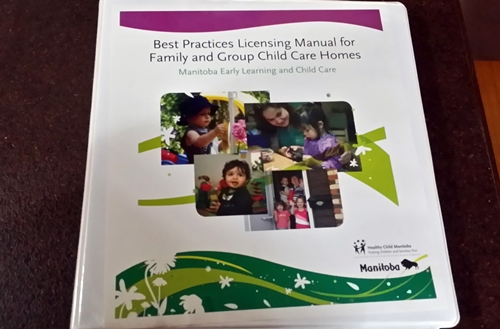
What part of licensing do they think is unnecessary? Criminal record/child abuse registry checks? First aid training or a 40 hour course? Behaviour management, nutrition, safety and supervision policies? Adequate equipment? Developmentally appropriate activities? Documentation and record keeping?
I don't think any part of the licensing process is difficult or unnecessary. If fact, I'd like to see more. I'd like to see MANDATORY licensing for ALL childcare homes. Greater incentives for trained providers (possibly higher ratios). MANDATORY annual professional development and more. I'm thinking about the best interests of the children, not just convenience and the cost for quality and safety.
There are regulations governing the manufacturing of items like cribs, strollers, carseats, and toys etc so parents know they are safe. There are regulations regarding the production, packaging, and labeling of food products to ensure they meet predetermined standards so people know what they are buying. Why do government officials and the general public think that parents should be able to choose unlicensed, untrained childcare but need regulations to assist them to safely feed, house, and transport their own children?
What other career field allows some businesses to operate unlicensed and/or untrained when others providing the same service are licensed? What is the incentive for any business to be licensed if they can legally operate without any oversight? Without any licensing/training requirements? What if, like in childcare, they could actually make more money if they were not licensed/trained than if they were licensed/trained?
Let's use truck drivers as an example. The majority of adults have a class 5 driver's license and have experience driving their own or a friend's vehicle. What if there were no restrictions on what size of vehicle you could drive and anyone could just decide "Hey, I'm going to buy a big truck and start a business delivering things for other people."
Why, is an experienced driver with their own vehicle not allowed to start up a trucking business without additional training or license? Why don't people argue "It's his truck, he can do what he wants with it. If other people are OK with letting him transport their stuff why not let him/them. He's never had an accident and doesn't need a little piece of paper to prove he's a good driver."
What if that same driver or another class 5 driver then decided "A bus isn't much different than a big truck. If I had a bus I could earn money driving people around." What if you'd seen that driver on the street with his bus full of happy passengers and decided to take a ride on his bus. Then imagine that one day there was an issue - something was wrong with the bus or the driver. What if it is too late to get off the bus before the accident happened?
Some argue that licensing all childcare facilities and requiring training for all childcare workers doesn't ensure quality - but it helps. Just like trained bus/truck drivers in licensed companies will still have accidents there are standards and checks in place to limit them. Why don't we hear arguments that training/licensing truck drivers doesn't prevent accidents so let's save some money and not bother requiring them to be licensed?
Do we need more incentives for family childcare providers to become licensed or do we need to eliminated the option for them to operate unlicensed childcare homes? Currently only licensed providers can accept government subsidized families but private paying families usually pay higher rates than the maximum subsidized rate so that isn't an incentive to be licensed.
What about training? Currently family childcare providers with Early Childhood Educator II/III training can receive slightly higher subsidized rates than untrained providers but those rates are still lower than the private rates most unlicensed/untrained providers charge so why bother? Just think of all the tax dollars we could save if we had trained and untrained police officers - both had the same duties but the city could pay the untrained ones less - but either trained or untrained officers could go work privately for more money without a gun permit or any other type of license.
In an effort to increase the number of licensed childcare spaces, the provincial government is considering lessening the requirements and 'red tape' needed to open licensed childcare homes. Why, when there was a shortage of family doctors was it never suggested that we lower the requirements to become a doctor? I don't think lowering FCC licensing requirements will increase the number of licensed childcare spaces and I'm absolutely positive it won't improve quality.
What part of licensing do they think is unnecessary? Criminal record/child abuse registry checks? First aid training or a 40 hour course? Behaviour management, nutrition, safety and supervision policies? Adequate equipment? Developmentally appropriate activities? Documentation and record keeping?
I don't think any part of the licensing process is difficult or unnecessary. If fact, I'd like to see more. I'd like to see MANDATORY licensing for ALL childcare homes. Greater incentives for trained providers (possibly higher ratios). MANDATORY annual professional development and more. I'm thinking about the best interests of the children, not just convenience and the cost for quality and safety.
Subscribe to:
Posts (Atom)