Saturday, November 28, 2015

The Great Divide

This post is intended to provide a little background for another post that I have been working on – a post which will probably become a whole series of posts because I’m having trouble organizing all I want to say into one post.  A series of posts I’m going to call ‘A Matter of Money’.  But first…

Many, many years ago when I first began the process to become a licensed family childcare provider there was a significant divide between home based childcare and centre based childcare.  There was a separate Family Day Care Association which amalgamated with with the Manitoba Childcare Association shortly after I opened my childcare home.

I was never part of the Family Day Care Association but early in my career I met many providers who had been.  There were many family childcare providers who resented the loss of their close-knit little association.  They felt they were now little fish in a big pond where the big fish didn’t understand them and had no interest in listening to what they had to say.

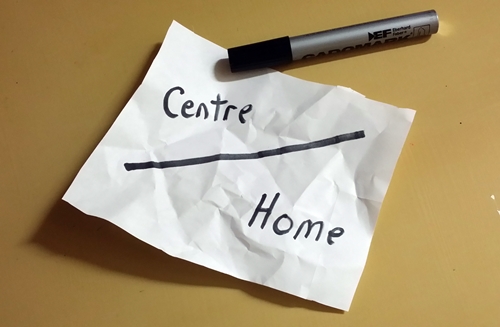
There were some who felt the line between home based childcare and centre based childcare should never be erased.  They would have preferred to have had that line drawn with a thick, black permanent marker. I have met line drawers from both sides of the line.
15-11-divide

As a newly licensed provider I was lucky to have a large, active family childcare networking group in my area.  These veteran providers offered vast amounts of knowledge and support that made diving into the big pond a whole lot easier.

In the beginning we struggled to gain acceptance.  Most of the workshops and events we attended were so specific to centre based childcare that there was often little that was pertinent to our environments.  Occasionally there were workshops offered explicitly for family childcare providers but, although the information was useful, being offered separate from centre based groups often simply strengthened the divide.

Many family childcare providers would only attend events if they knew others that were going and we could all sit together.  At one time or other we had all experienced some sort of discrimination from centre based ECE’s – sometimes being dismissed as mere annoyances – much like the little sister of the teenager who is forced to let them hangout.

At this point I have to say that since those early days things have improved immensely.  I have many really good friends who work in centres and value the work we do in family childcare.  The important thing is understanding the differences.  We each have our own unique set of challenges and benefits.  Centre based childcare and family childcare are not the same thing – and neither one is ultimately better than the other.

We do, or at least should, have the same goal – providing the best possible opportunities for all children to reach their full potential.  Our fight should be for the children and not against each other.

Wednesday, November 25, 2015

New Soup

I have always liked to have at least one home made soup included on our four week revolving menu.  Over the years I have tried many different soup recipes but sadly none of them have ever received enthusiastic, positive reviews from the children.

I blame bread.  I like to have a heavy, home made savory bread with soup to dip in and soak up the broth…yum.  However, if I serve homemade bread then ALL the children eat only the bread and won’t even try the soup.

So, I tend to make all my homemade soups very thick – more like a thin stew than a soup.  With pasta or rice included in the soup we don’t need to have bread added as a side dish to get the grains.  Still, soup is definitely not a popular item with the children unless it comes from a can and is laden with salt.

Last month I introduced a new soup and this week we had it for the second time.  All but one of the children eat this new soup – in fact, most asked for a second helping too.  The one who doesn’t eat it has never even tried it, adamantly insisting they don’t like it without tasting even one bite of it.   Stubbornly sitting at the table eating only raw vegetables and salad because I didn’t make any bread. ;-)

Here is the recipe for Lasagna Soup;
  • 4 Italian sausages,cut in half lengthwise and sliced
  • 1 medium onion, diced
  • 1 680ml can of spaghetti sauce
  • 1 can diced tomatoes
  • 1 L water
  • 1 L vegetable stock
  • 8 lasagna noodles, broken in small pieces
  • 500 ml cottage cheese

Stir fry sausages and onions together in large pot.  Add pasta sauce, tomatoes, water and vegetable stock. Simmer.  Add noodles and cook until softened (about 30 minutes).  Remove from heat and add cottage cheese.  Serve topped with Parmesan or Mozzarella cheese if desired.

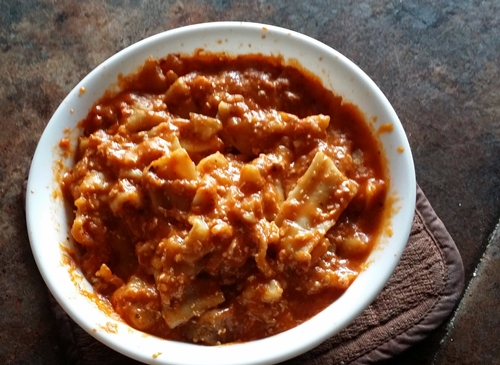
Here’s a picture but it was taken later in the day after  the leftover ‘soup’ had already been refrigerated and so the noodles have soaked up almost all the broth but it still tastes good.

15-11-soup

Thursday, November 19, 2015

Play Room

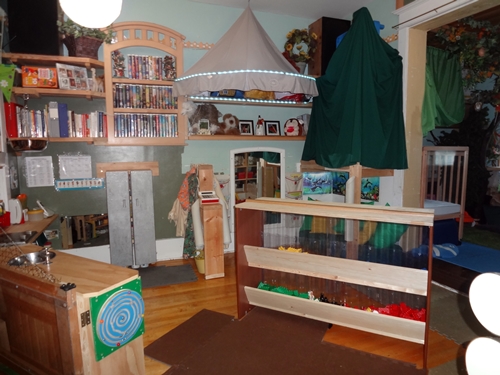
It was back in July that I wrote about removing the loft from our play space.  At that time it looked like this;

15-07-loft03-2

I liked the way the block bin looked when it was placed diagonally across the room but it did not function well.  There was limited room in the block area and the angles were causing issues with my plans for replacing the old rubber floor tiles.


So, a few weeks ago I moved the block bin back towards the cozy couch.  This move makes the reading nook into a smaller, quieter area that is less prone to active play and heavy traffic flow.  It also provided a much larger space for block building adjacent to the workshop/music area.

15-11-PR00

Love the new flooring now too.


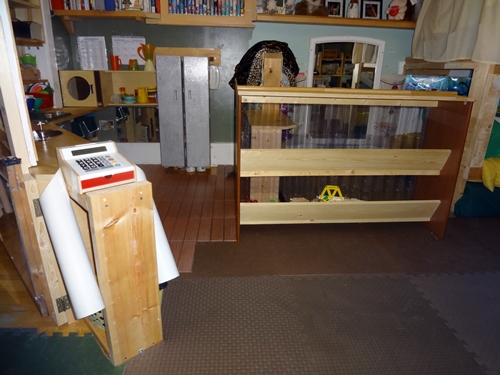
I added an another shelf between the back of the block bin and the dress-up clothes rack.  This adds stability, provides extra counter space for the housekeeping area and creates a ‘tunnel’ so the children crawl through to the cozy bench instead of running and jumping ;-)

15-11-PR01

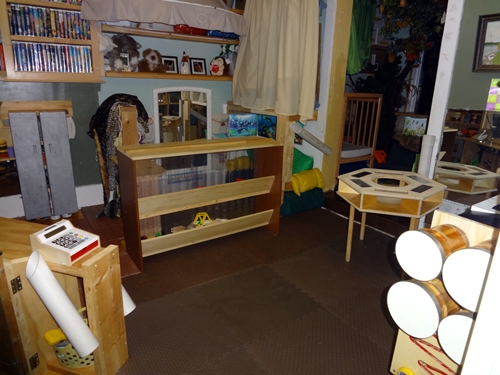
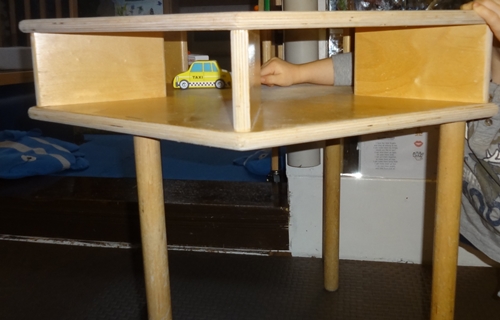
The larger, combined block/workshop/music space has also allowed me to incorporate the new-to-us/second hand ‘science table’ that was donated to our program – thanks Jamie!

15-11-PR02

I certainly had no intention of restricting the use of the table to only science activities.  With all the tools in the workshop area beside the table I thought it might make a good workbench. So far the children’s favourite use for the table is another tunnel – they much prefer to crawl under the table to get to the nature area instead of walking (running) around the table.  They also like to use the spaces in the table as tunnels for the toys;

15-11-PR04

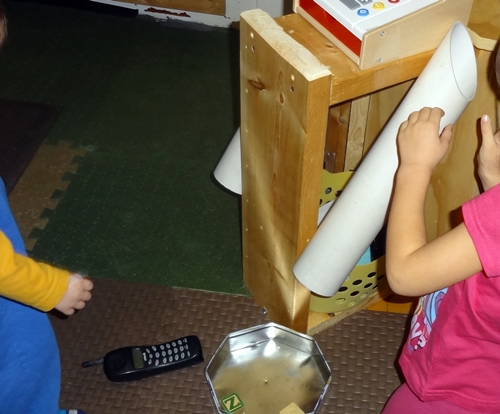
Maybe it is the new room arrangement but dropping – and catching – objects through the pipes has been gaining popularity again too.


15-11-PR06 

 We’re loving all the new activity with the old stuff.

Thursday, November 5, 2015

Train Tracks

I have several types of construction toys which are never all out because there is not enough space and too many toys is overwhelming.  The various construction sets are placed in the block area bins as one complete set or a combination of two or more partial sets.  Selecting the set(s) to have available is dependent on the interests and ages of the children enrolled at the time.

The train tracks are one of the construction sets that sometimes cause issues in a mixed age group.  Some children enjoy building large elaborate track systems but this requires cooperation if there are several children involved.  When infants and toddlers are present this is not always possible and many young children find building with the train tracks to be frustrating.

My current group of infants and toddlers may be the exception.  The train tracks have been available in the block area for almost three months now and the children are showing no signs of getting tired of playing with them.  I have changed the other items in the block bins several times since the tracks were introduced – now we have the stacking cups – but the train tracks remain.


At first the toddlers were mostly just interested in the trains and rarely attempted to use tracks.  Those that did use tracks were content to just put a few pieces of track together and drive a train back and forth on it.  Then one day they wanted to make a circle so we learned that eight small curves make a small circle;


And eight large curves make a larger circle;

 15-11-tracks02 

Curve, turn, flip, and direction were some of the words we used often during the process. For a couple weeks they were content with these two designs and became experts at building them without assistance. Then I suggested we change things a bit and use both types of curves – four small and four large – still eight pieces but arranged in pairs first.

 15-11-tracks03 

 Words used for this one were ‘pair, sides, ends and oval.  Then a new word – alternate – and with that we created this;

 15-11-tracks04 

By this point several of the toddlers had become expert builders able to connect several shapes together and create their own shapes.  My role was mostly just observing and introducing some new words like ‘elongate’;


 and ‘spiral’ when they created this;


With this group of toddlers the train tracks may be out for a while yet – they are still showing no signs of getting tired of building train tracks.  In fact, the two year old was super excited to build and name this ‘heart’ all by himself.

15-11-tracks07 

We love train tracks.

Wednesday, October 28, 2015

Coloured Paper

The basic craft supplies are always available for the children to use independently throughout the day – pencils, crayons, chalk, scissors, glue, tape, rulers, magazines and various types of paper. The children’s choice of paper is something that I find interesting.  The current school-age children go through vast amounts of plain white paper, cutting pieces and gluing/taping them together to create books, masks etc.  They seem to have no interest in the coloured paper or adding colour to their projects – unless there is paint.

The school-age children I had here for the summer preferred to use the lined paper.  They created impressive stories and art work filling every space on one paper before selecting another piece of lined paper.  They never chose plain white paper or coloured paper.

For the preschoolers paper choice is a major decision often taking more time than anything that they add to the paper.  Coloured paper has been their favourite ever since I showed them that the white pencils/crayons were not ‘broken’, but you could only see them on darker paper. If several of the preschoolers are at the table at the same time the paper choice process takes even longer since they often rethink their colour choice if the others pick a different colour.

Every time I restock the coloured paper the selection process is the same.  Pink paper is always the first choice and when all the pink paper is gone they will choose purple.  After that the decisions get more difficult – light blue, dark blue, red or black get used up next but they definitely are not the preferred colour choices.  In fact, after the pink and purple are gone they often choose plain white or lined paper over the other coloured paper.

Eventually the stack of coloured paper contains only yellow, orange, green, and brown.  The preschoolers will occasionally use these colours but they never seem pleased about it.  So, as the sad looking four year old sighed and reluctantly picked a yellow paper from the dwindling pile I asked  “Why don’t you like these colours?”  She replied “I like them but they are your favourites.”

?!?!?!


Yes, they are.  Throughout all our activities we often discuss favourite colours as well as other likes & dislikes but until she mentioned it I had never even noticed that the ‘leftover’ paper pile contained all my favourite colours.  Awww, all this time have they been leaving those papers for me?  I always thought they picked pink and purple first because they liked those colours best but now I’m wondering if they chose them because they know I don’t like pink and purple. 

They’re very perceptive.

15-10-paper01

Tuesday, October 20, 2015

Lumpy Dough

Play dough and other sensory materials are very popular with children of all ages.  I like play dough because unlike paint and many of our other sensory activities there is little set-up time required for play dough.  I always have a batch of prepared play dough stored in my refrigerator.  The fact that it is cold at the beginning of the activity and warm at the end is an added sensory experience.

The recipe I like to use most often is;
  • 1 cup flour
  • 1 cup water
  • 1/2 cup salt
  • 3 Tbsp cream of tartar
  • 2 Tbsp vegetable oil
Combine flour, salt and cream of tartar in a medium sized saucepan.  Add water and oil: cook over medium heat stirring constantly.  When mixture pulls away from side of pan and forms a large ball, remove from heat and let cool.  Knead dough, divide and add food colouring if desired.


I do usually add some time of colouring to the dough and sometimes I add herbs, spices or some other scented material as well.  I have plenty of tools to use with play dough – knives, scrapers, icing decorators, cookie cutters etc but I find that many of the children become so focused on tool ‘ownership’ that the play dough gets forgotten.  Since this is a ‘process’ activity there is never a required product so I rarely offer tools unless the children specifically ask for them.

I chose not to add any colouring or scents to the latest batch of play dough.  Instead, I started the activity by introducing foam ropes and tissue paper.  The children then got to rip the tissue paper into tiny pieces and cut the foam rope – this was more challenging than I anticipated.  The foam was so dense that none of the children’s knives could cut through it.  Scissors worked but the cut pieces tended to fly everywhere – amusing to some of the children but annoying to anyone (me) trying to collect all the pieces.


The children then had the opportunity to mix the foam and paper into their dough – three very different textures.

15-10-LD02 

Some chose to add their ‘decorations’ one at a time while others did so by the handful.  Some used tools and played with their play dough as usual during the decorating process.


Interestingly several of them mixed the paper and foam pieces in the dough and then meticulously picked them all out and then mixed them in again.  In fact, we have played with this dough several times since we first made it and ‘undecorating’ it has been a very popular activity – fantastic for fine motor skills.

 15-10-LD04 

By far my favourite response to this activity came from the school-age children.  When they arrived after school and went to wash their hands for snack they saw the post-activity play dough on the counter.  They were super excited about having ‘cookies’ for snack – followed by a little disappointment that it was just play dough.


15-10-LD05

Tuesday, October 13, 2015

A Lovely Autumn Hike

We have a new favourite park.  I’ve passed it often in the car but for some reason always thought it was too far away to take the children hiking there.  I failed to realize that it was really just a block passed some of our other routes.  Yes, it may be too far away for some toddler groups but my current group has no problem with the distance.

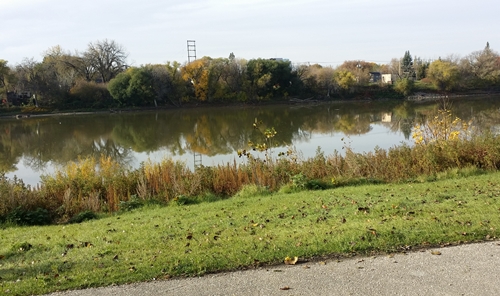
The weather was wonderful on Friday – it was hard to believe it was October already.  The park was quiet;


We headed to the bench.  This was the halfway point of our planned route so it was the perfect place to take a break.  It also offered a relaxing view of the river – the children all sat quietly, mesmerized by the scenery;

 15-10-fall02 

 We met some new friends – they were wary but let us get fairly close;


 15-10-fall03 

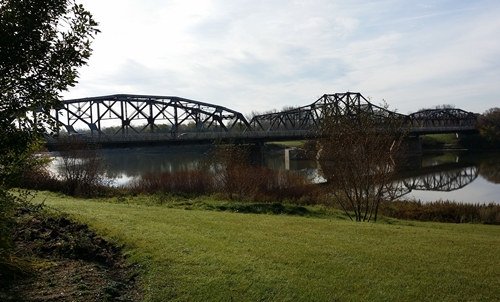
 The children got very excited when they saw a ‘new’ bridge.  We have never walked over this one and wouldn’t today either but we got close;

 15-10-fall04 

 We did stop by one of our other bridges on our way back but we couldn’t sit on the bench this time;

 15-10-fall05 

 As we passed under the big bridge we listened to the echo as usual.  One of the toddlers expressed concern that he couldn’t see our shadows anymore.  We walked a little farther and there they were again – he insisted that I take a picture now that they were back;

15-10-fall06 

It was a lovely Autumn hike in the city.